
Identity design · Web design · Social media design
Tuney
A mark, three builds and a website for a Discord music bot
- Production
- Staging
- Dev
The product
A music bot that joins your Discord voice channel and plays what the server asks for.
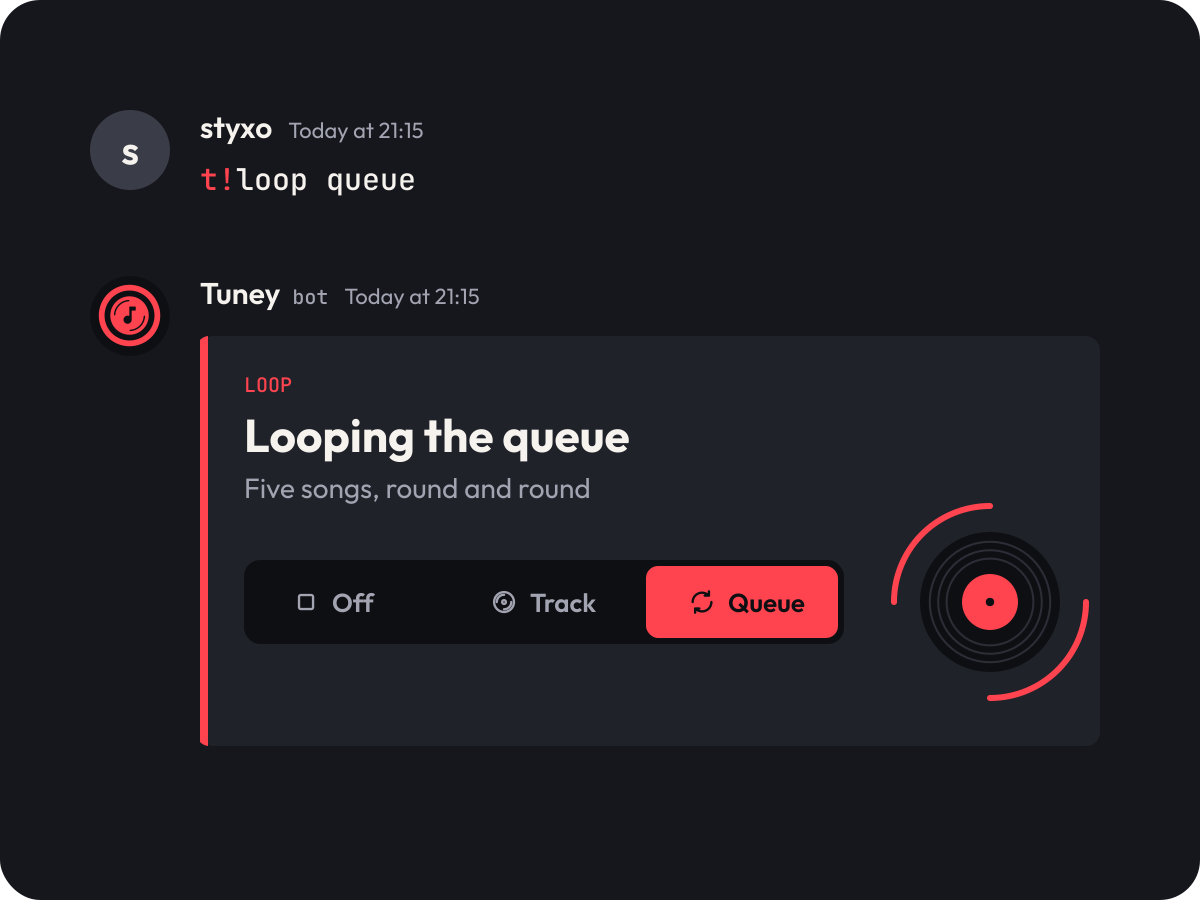
You type t!play and a song. Tuney joins, plays it and posts a player message with eight reactions under it: like, shuffle, previous, pause, skip, loop, stop and leave. Its icon comes in three builds, production, staging and dev; we read the last two as its test builds.
We had drawn its icon, a coral record with a note on it, a colour for each build, and two pictures for a site: bass boost and the reaction controls. This time we finished the job: redrew the mark, made the builds a system, and designed the type, colour, icons, illustrations, applications and a six-page website around it.

The mark
The same record, redrawn on a grid
The idea stayed: a ring of sound round a disc, a note playing on it, and two grooves that make it spin. What changed is the drawing.
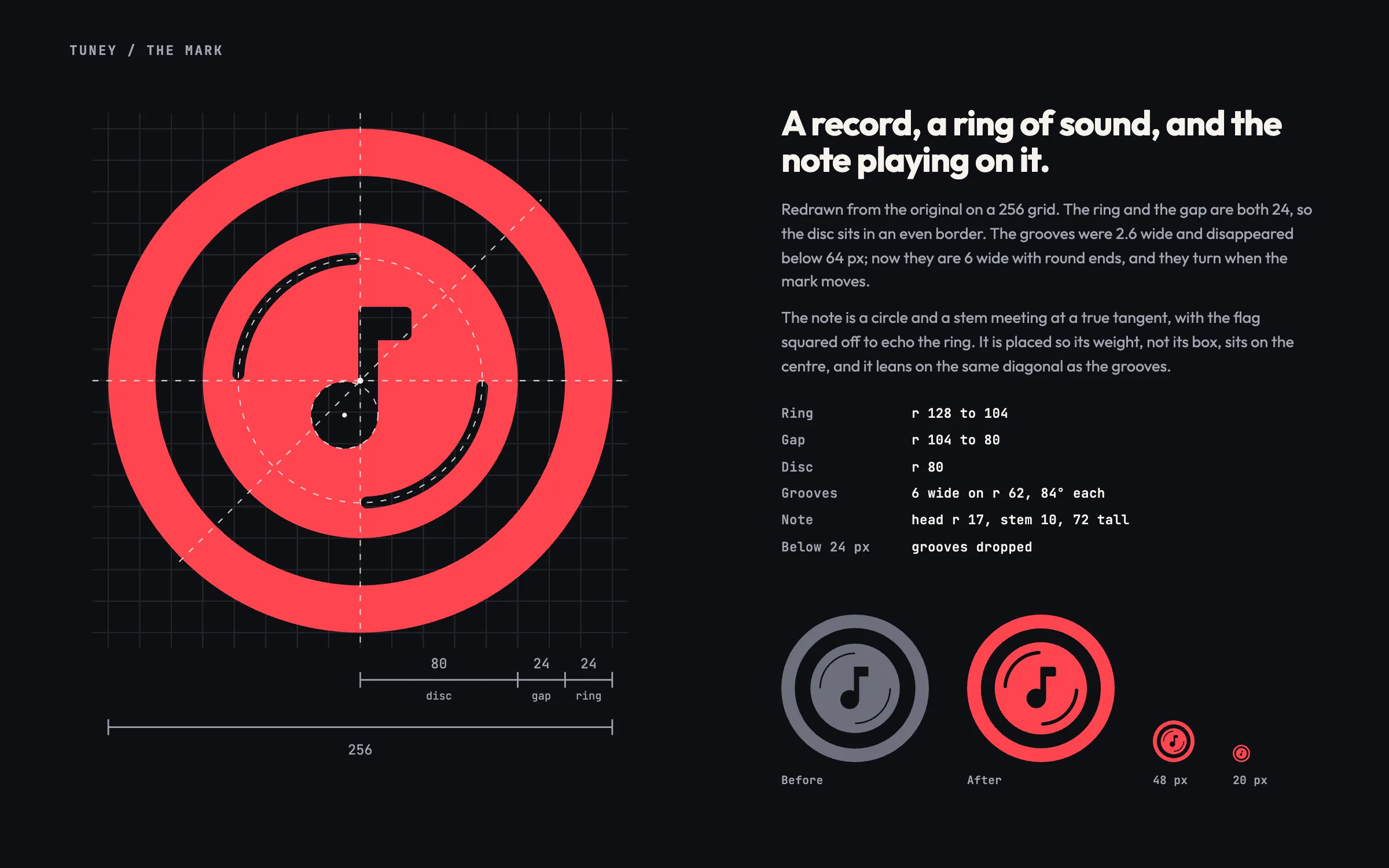
- 01
An even border
The ring and the gap are both 24 on a 256 grid, so the disc sits in a border of equal steps.
- 02
Grooves that survive
They were 2.6 wide and vanished below 64 px. Now they are 6 wide with round ends, and below 24 px the small mark drops them.
- 03
A note that balances
Head and stem meet at a true tangent; the flag is squared off like the ring, and the note’s weight, not its box, sits on the centre.
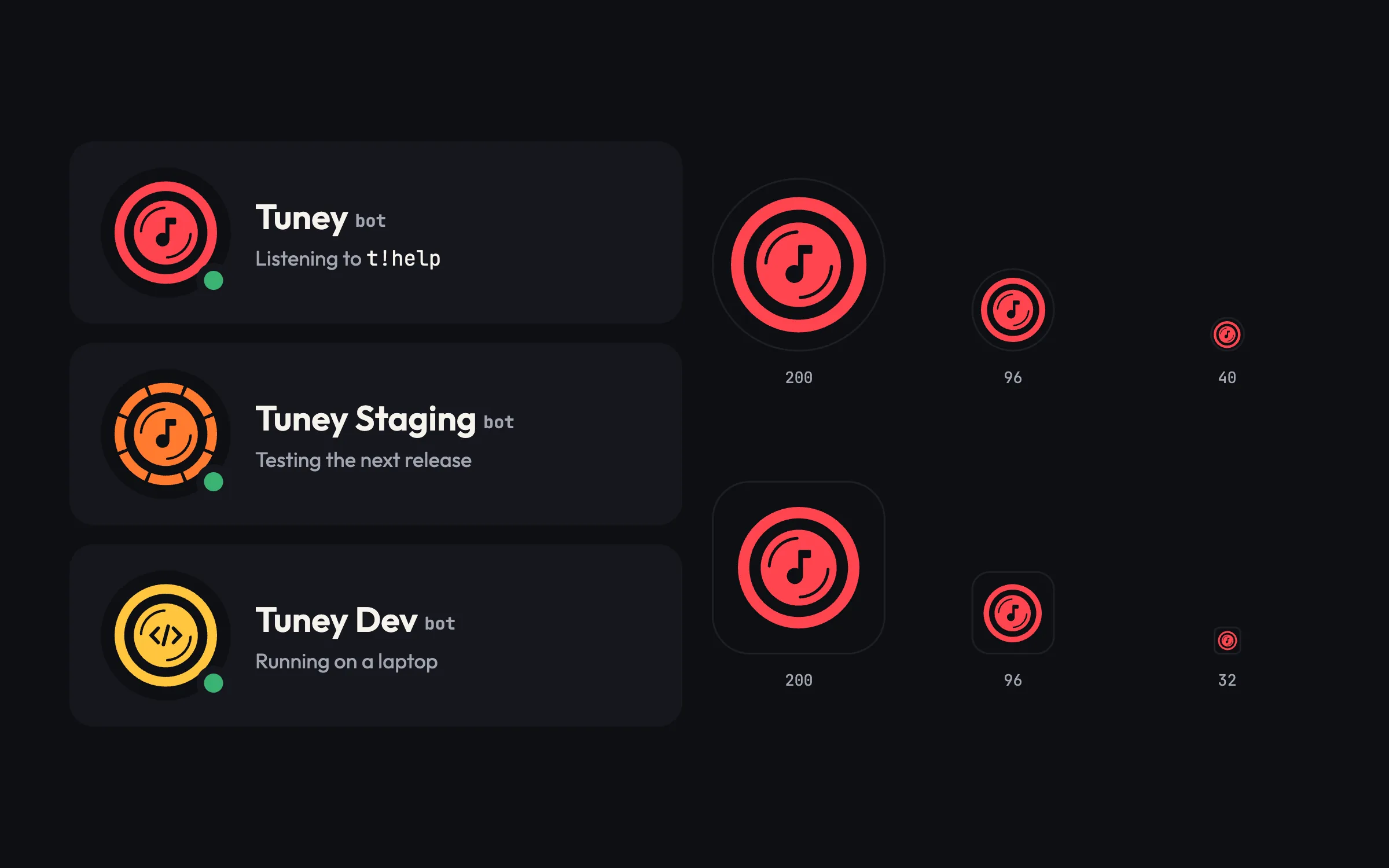
Three builds
Told apart by colour, then by shape
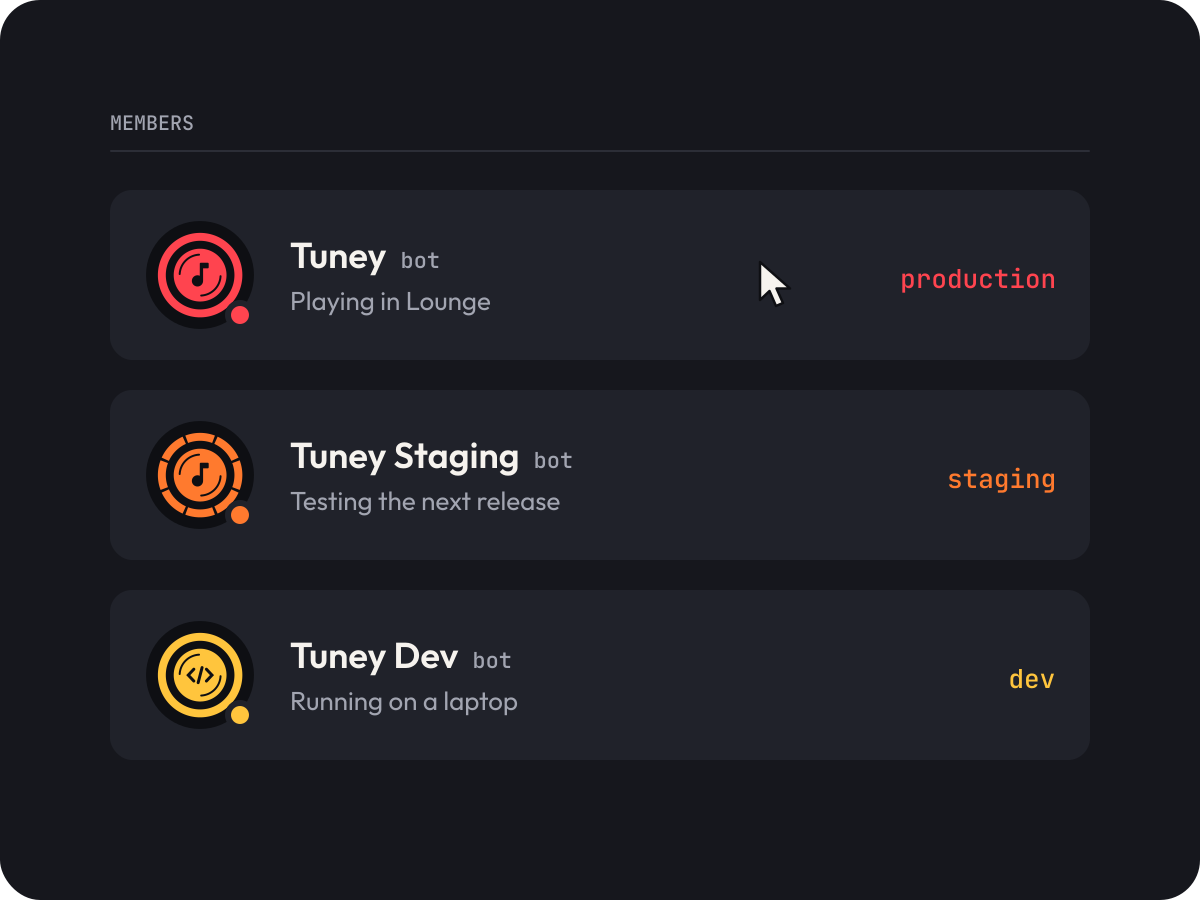
The first staging icon differed from production only in colour; dev already swapped the note for code brackets. Now staging’s ring breaks into eight as well, so all three stay apart in grey, at avatar size and for anyone who can’t tell coral from tangerine.
production · Coral #FF444F
Tuney
The one servers add. Solid ring, the note.
staging · Tangerine #FF7A2E
Tuney Staging
For testing the next release. The ring breaks into eight, like a loading spinner.
dev · Yellow #FFC53D
Tuney Dev
For work in progress. Code brackets in place of the note, as in the first icon.
Lockups
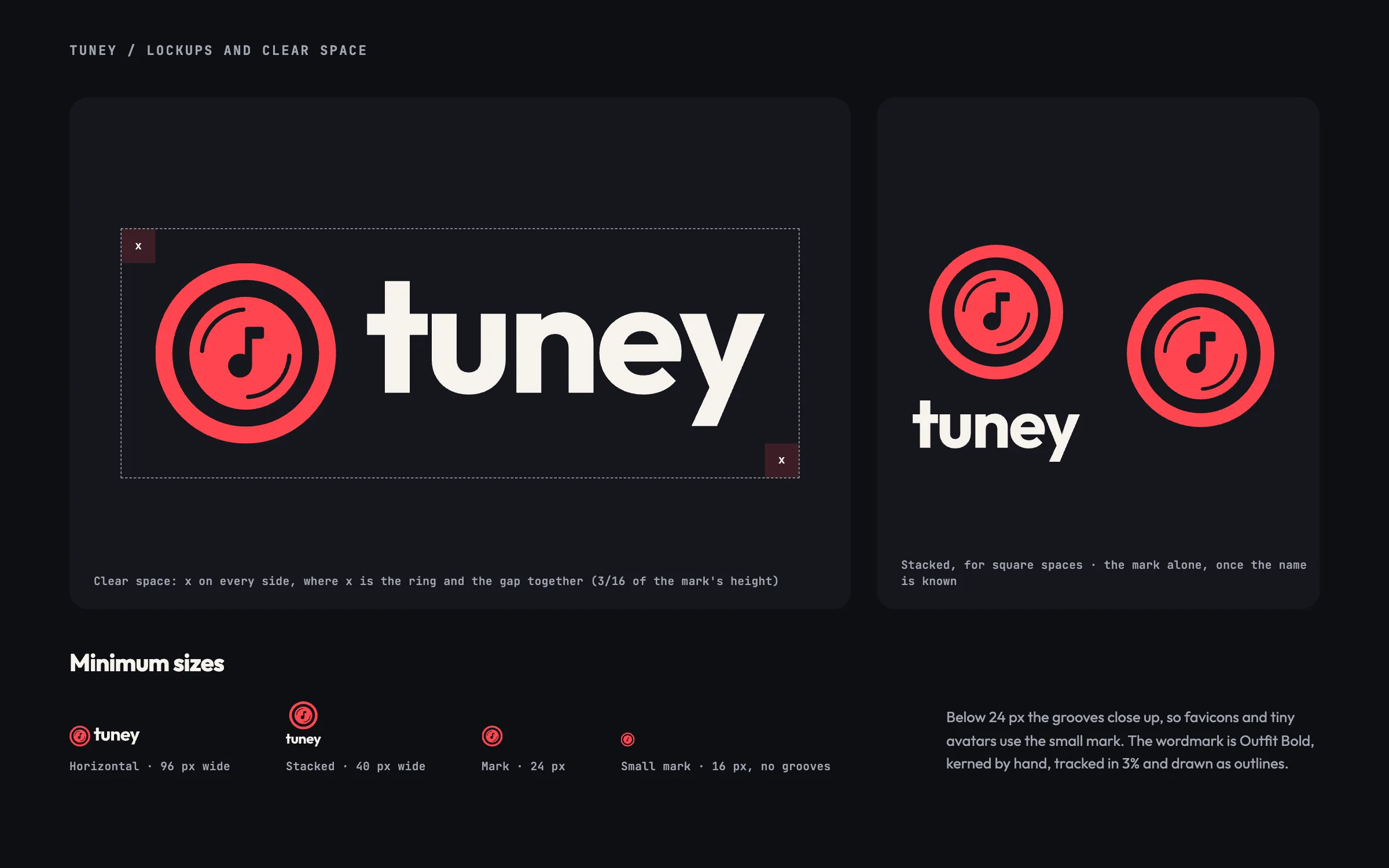
A wordmark cut from Outfit Bold
Set in lowercase, kerned by hand, tracked in 3% and drawn as outlines. Horizontal, stacked and the mark alone, with clear space of one ring and gap on every side.
Colour
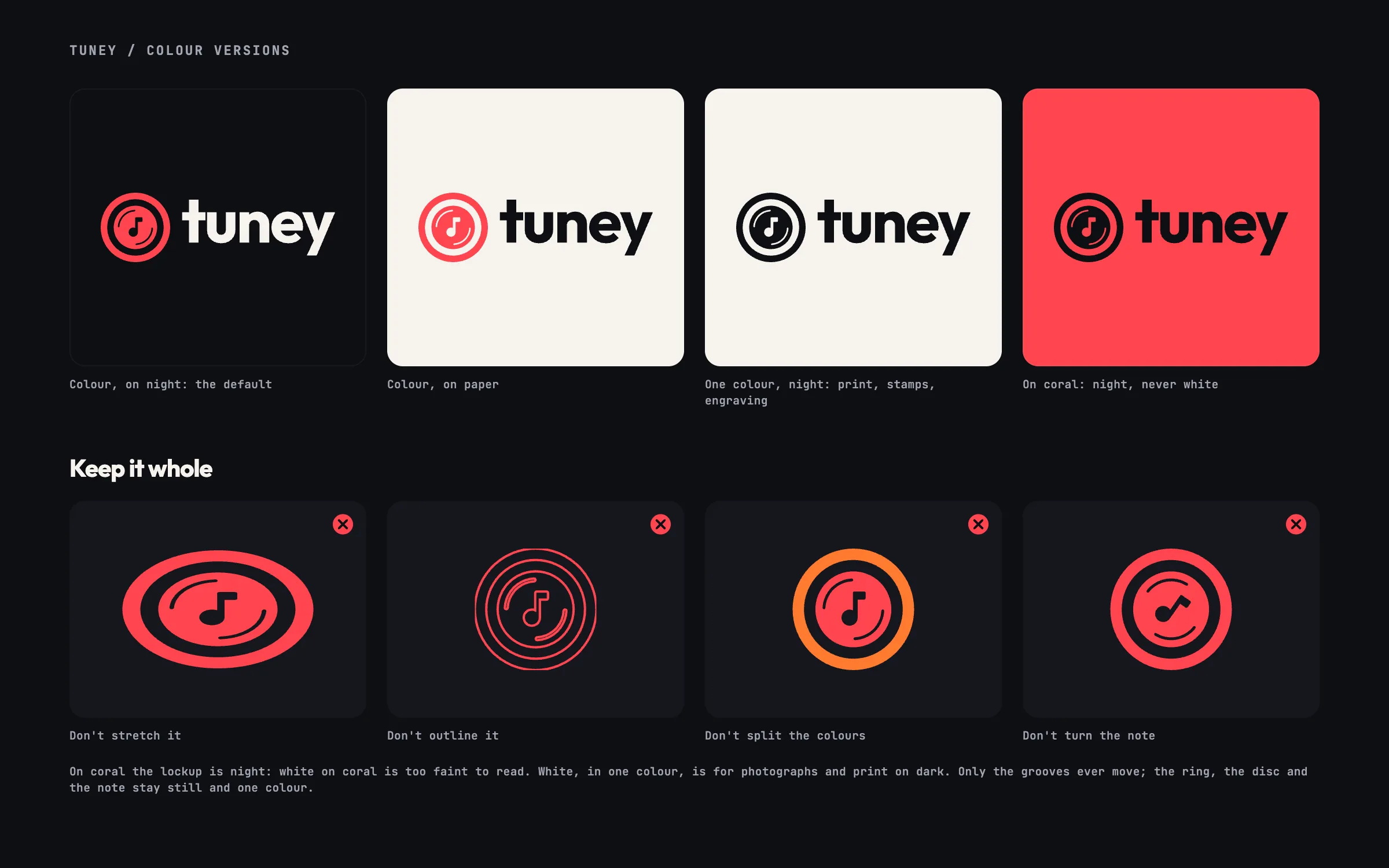
Night, and one light per build
Coral is the record playing. Tangerine and yellow only ever appear with their own builds. Coral buttons take night type: white on coral is 3.4:1, night is 5.6:1.
- Coral#FF444FProduction, the mark, primary buttons
- Tangerine#FF7A2EStaging
- Yellow#FFC53DDev
Night
#0E0F13
The ground
Graphite
#16171D
Cards, panels
Slate
#20222A
Chat, inputs, code
Line
#2C2E37
Hairlines
Mist
#A2A5B1
Secondary text
Paper
#F6F3EE
Text on night
Type
Outfit to read, JetBrains Mono to type
Outfit’s round o and u are drawn from circles, like the mark. Tuney is used by typing, so commands are set in the mono you type them in, with the prefix in coral.
Outfit · 400 600 700
Aa
JetBrains Mono · 400 500
t!bb 20%
- 72 · HeadlineMusic in your voice channel
- 40 · SectionControls under every song
- 22 · LeadTuney joins your voice channel and plays what you ask for.
- 17 · BodyInvite it once. After that, anyone in the server can queue a song.
- 15 · Commandt!play harbour lights
Icons and illustration
Drawn from the mark’s parts
Sixteen icons for the commands on a 24 px grid, with 2 px strokes and quarter arcs like the grooves. The original Bass boost and Reaction controls pictures became a set of six: one moment in a chat each, flat, with coral for whatever is playing.
- play
- pause
- skip
- previous
- shuffle
- loop
- like
- stop
- leave
- queue
- bassboost
- volume
- nowplaying
- search
- voice
- code
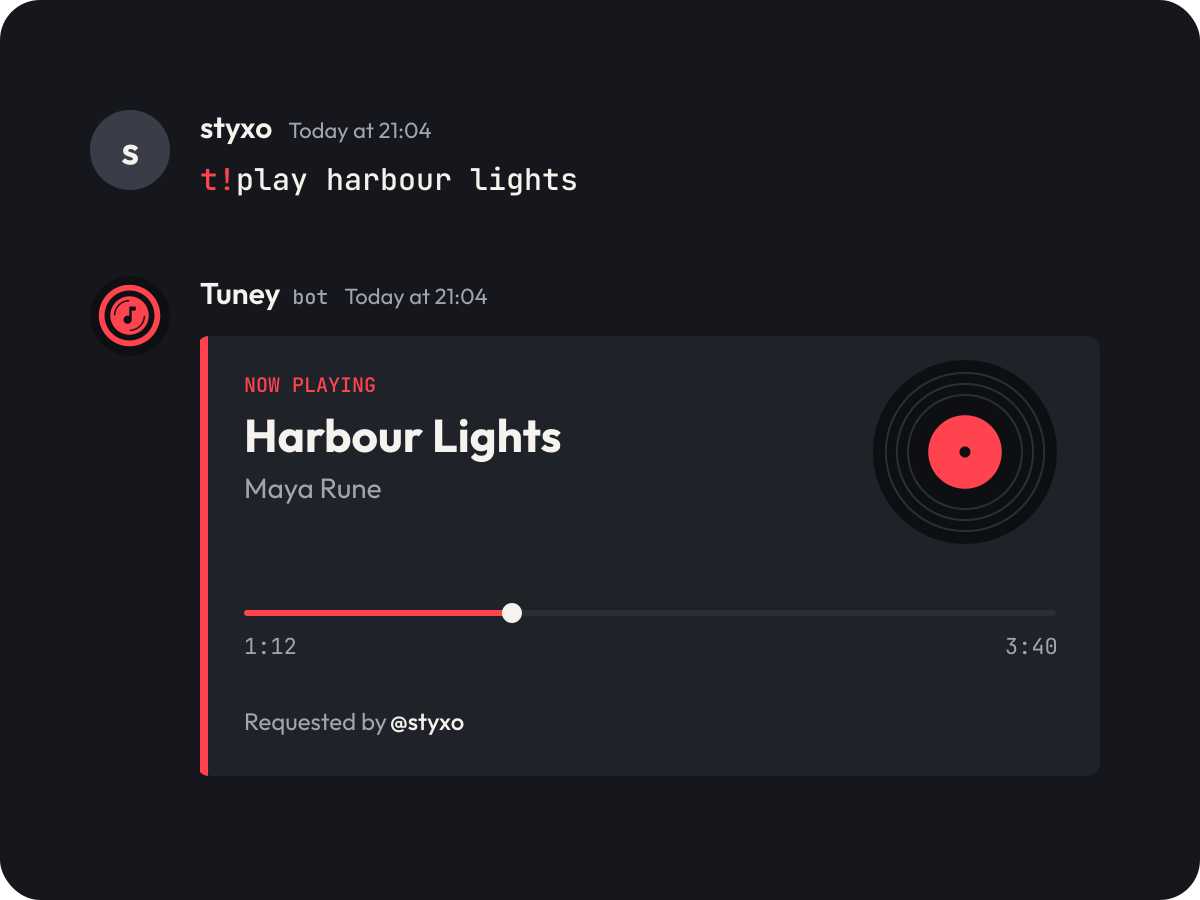
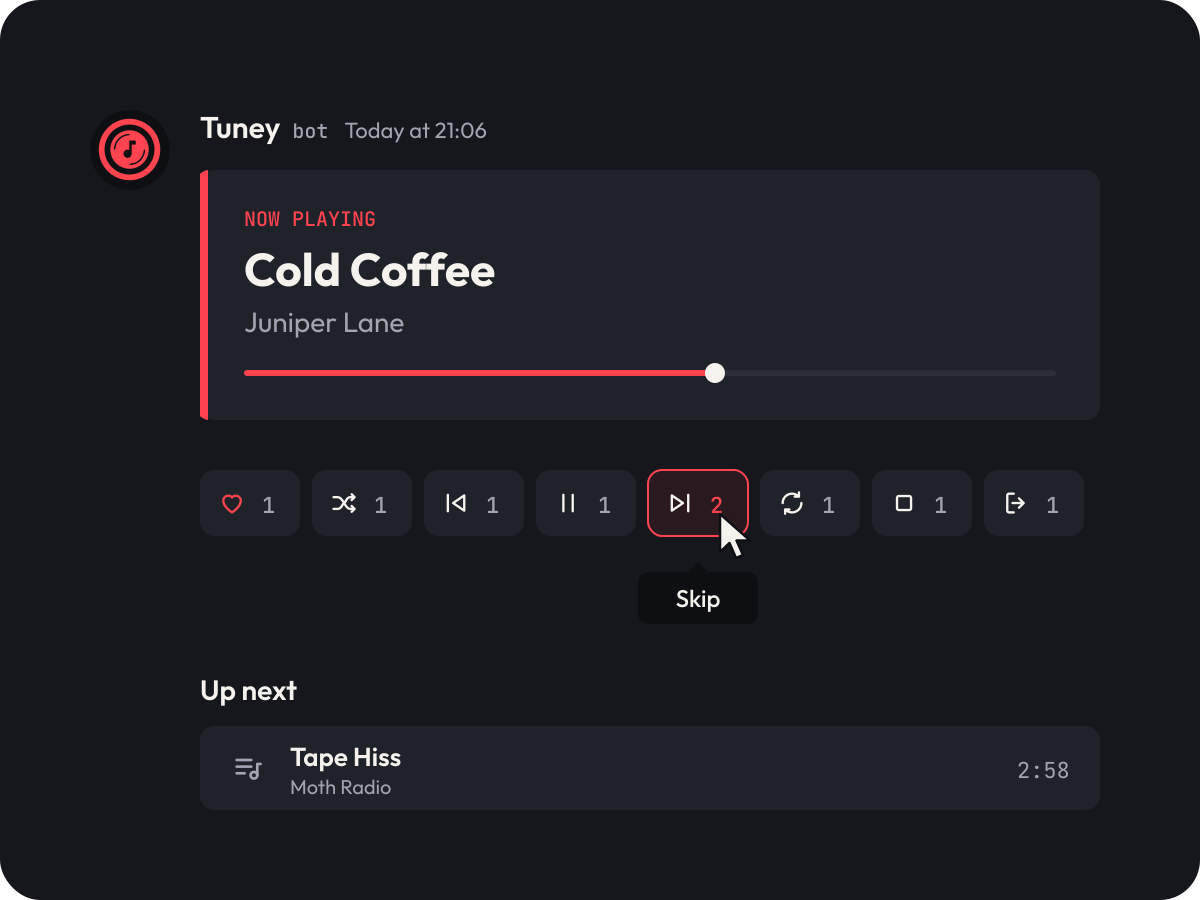
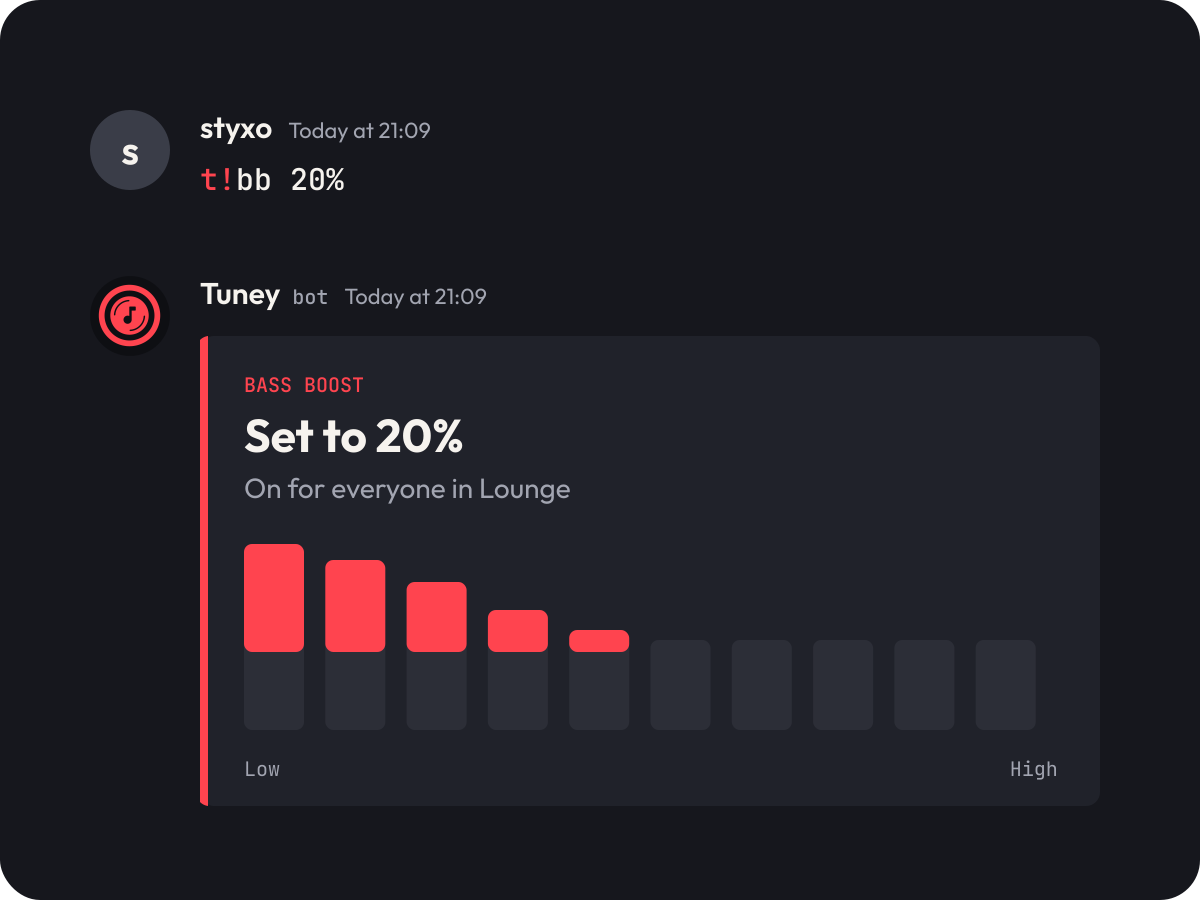
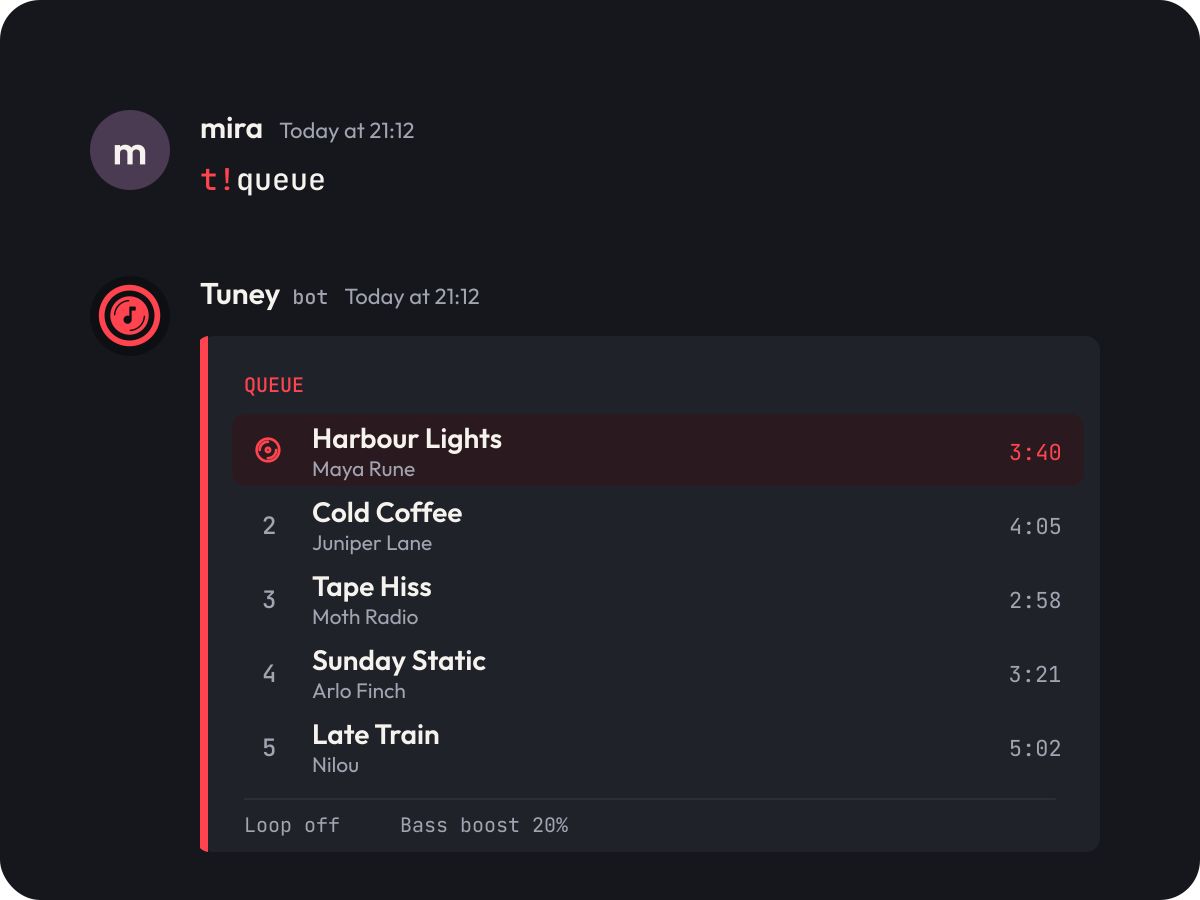
In use
From the app icon to a twelve-inch slipmat
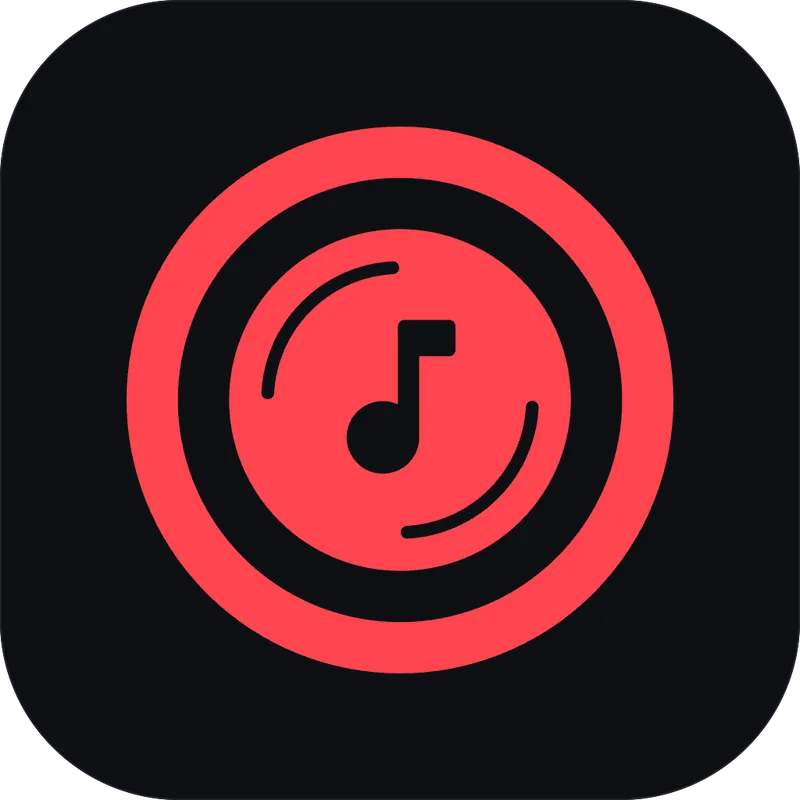
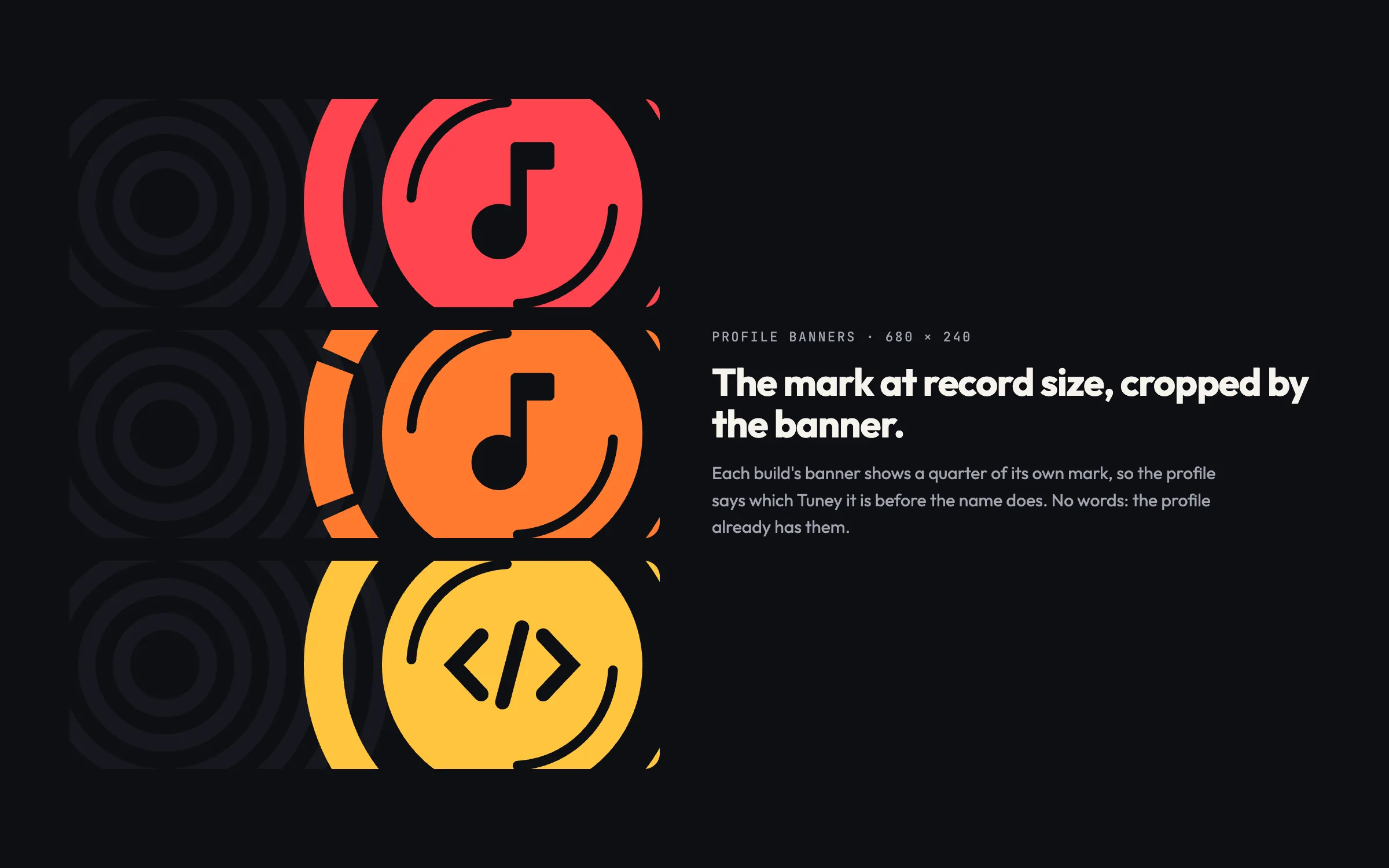
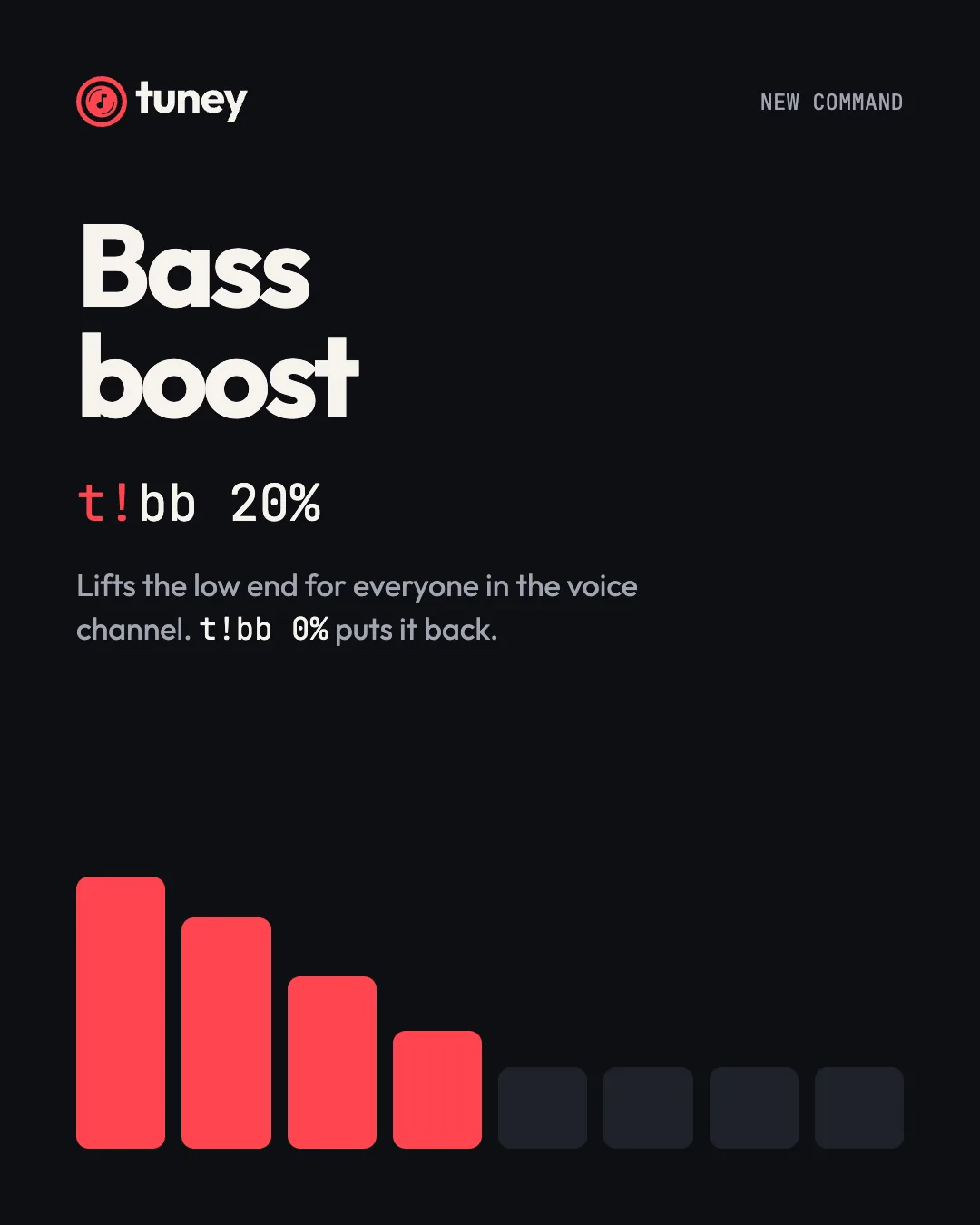
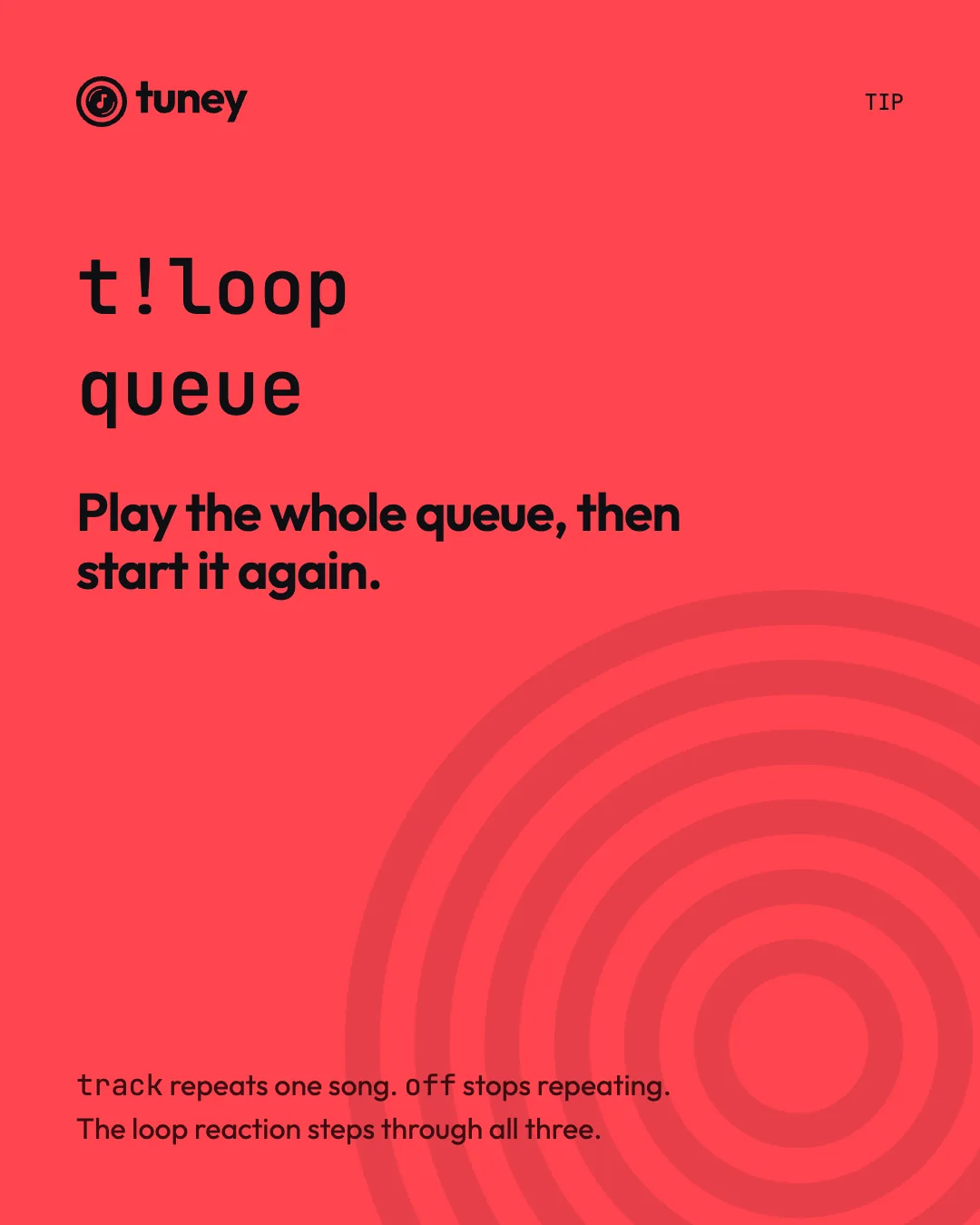
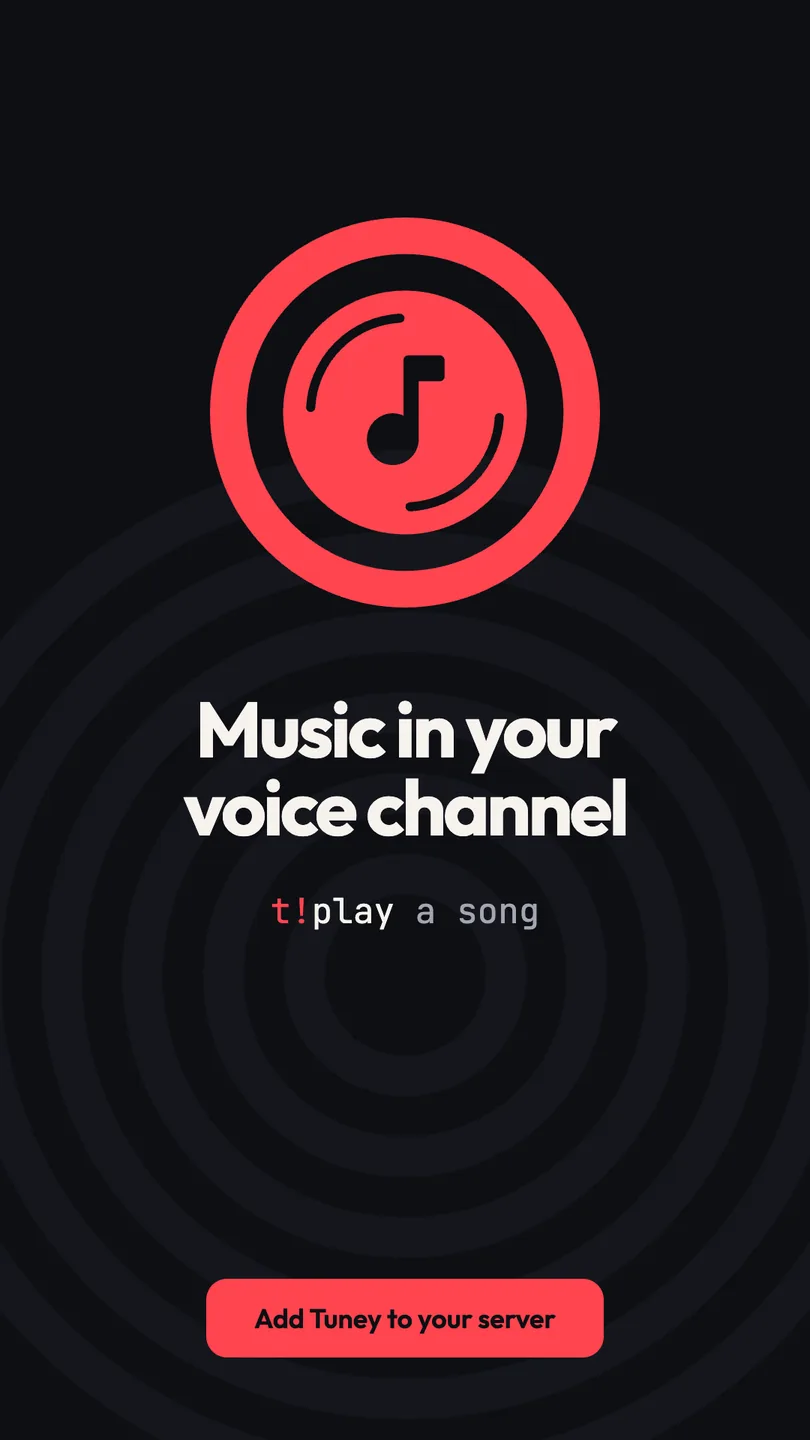
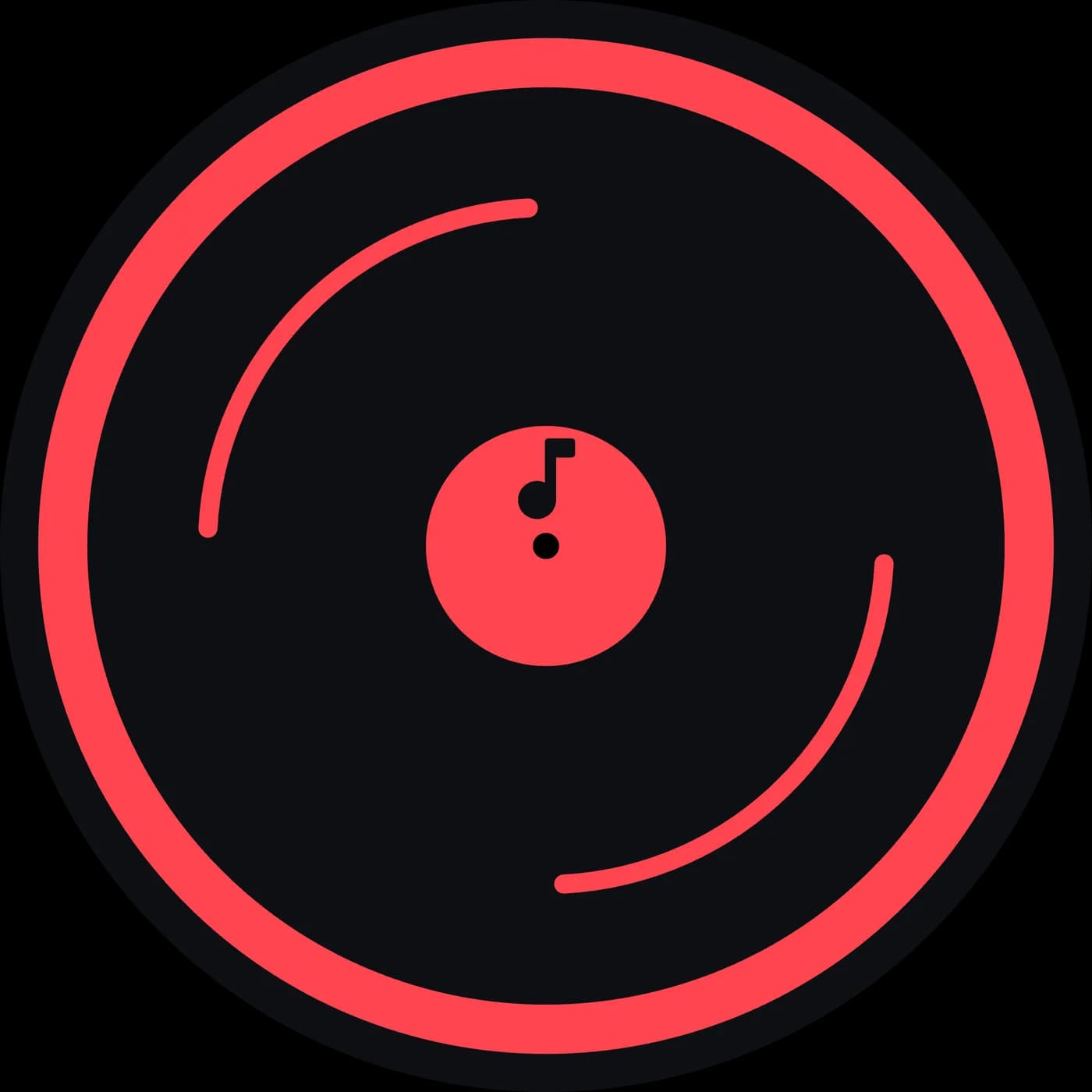
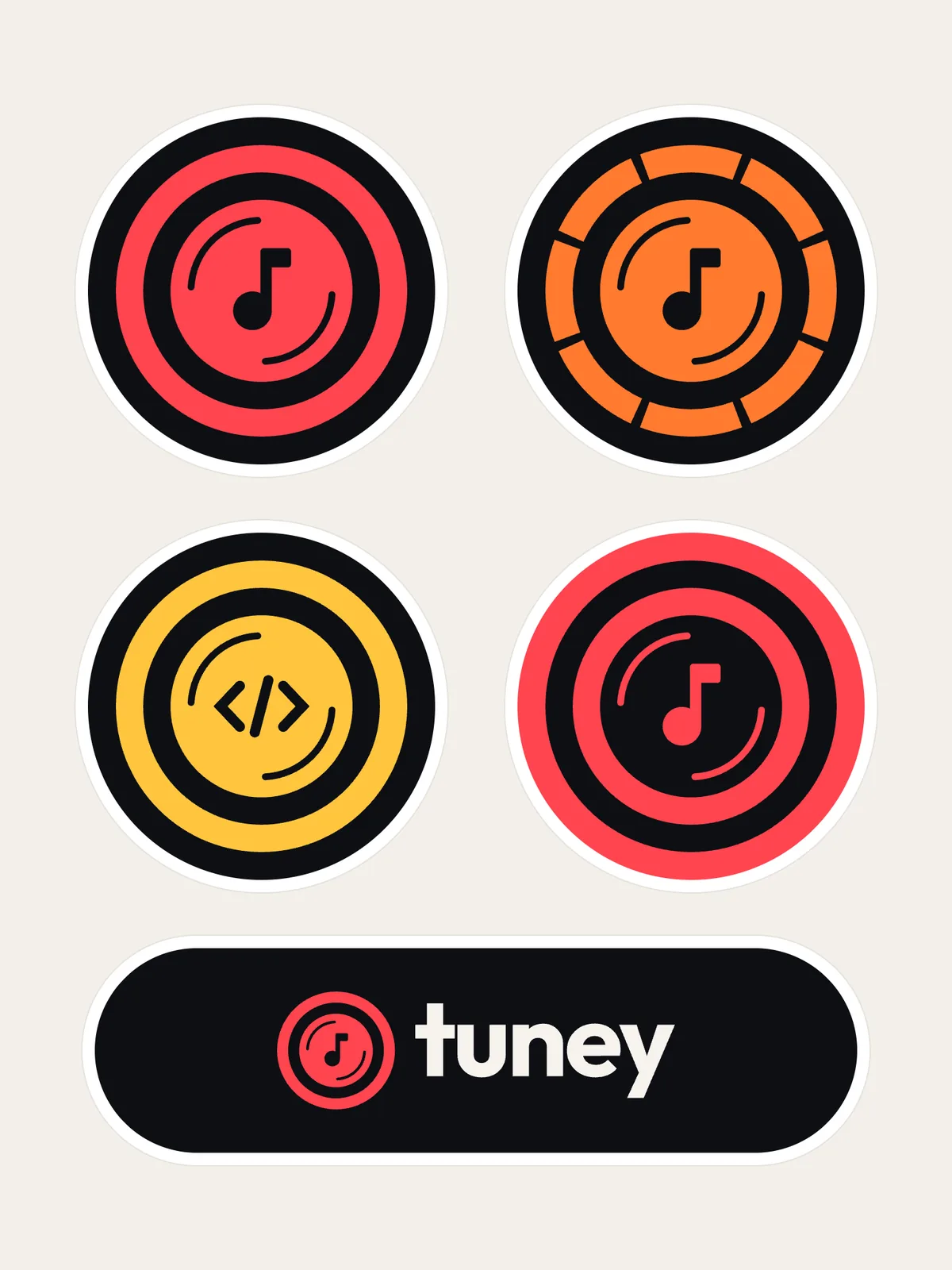
The app icon and each build’s profile banner, post templates for new commands and tips, a story, and two things for the people who use it.
The website
Six pages that show the bot working
Home, Commands, Getting started, Builds, Support and a 404, designed at 1440 and 390. The product is drawn in the page as a real chat, player and reactions included, not as a screenshot.
Our design; the site isn’t live. The songs, people and servers in it are placeholders.


Home at 390

Commands at 390

Getting started at 390
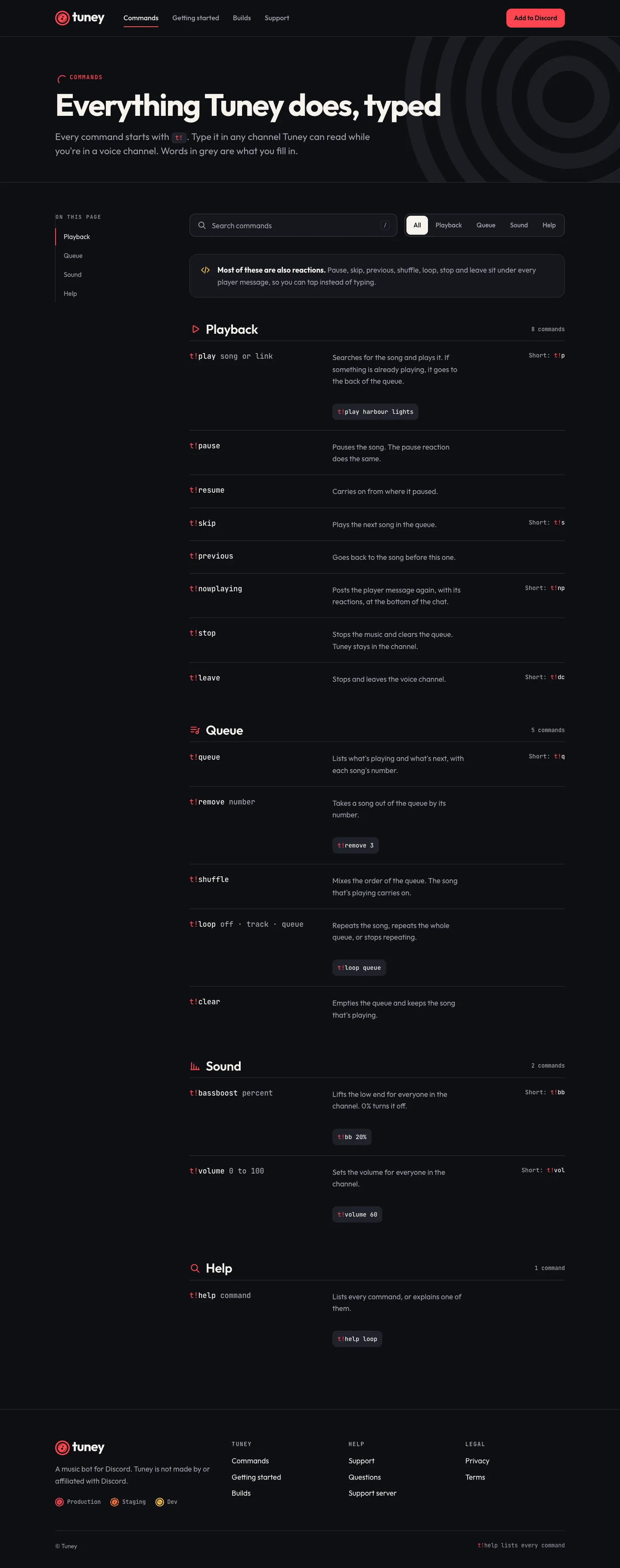
Commands: every one, grouped, with what it takes and a short form
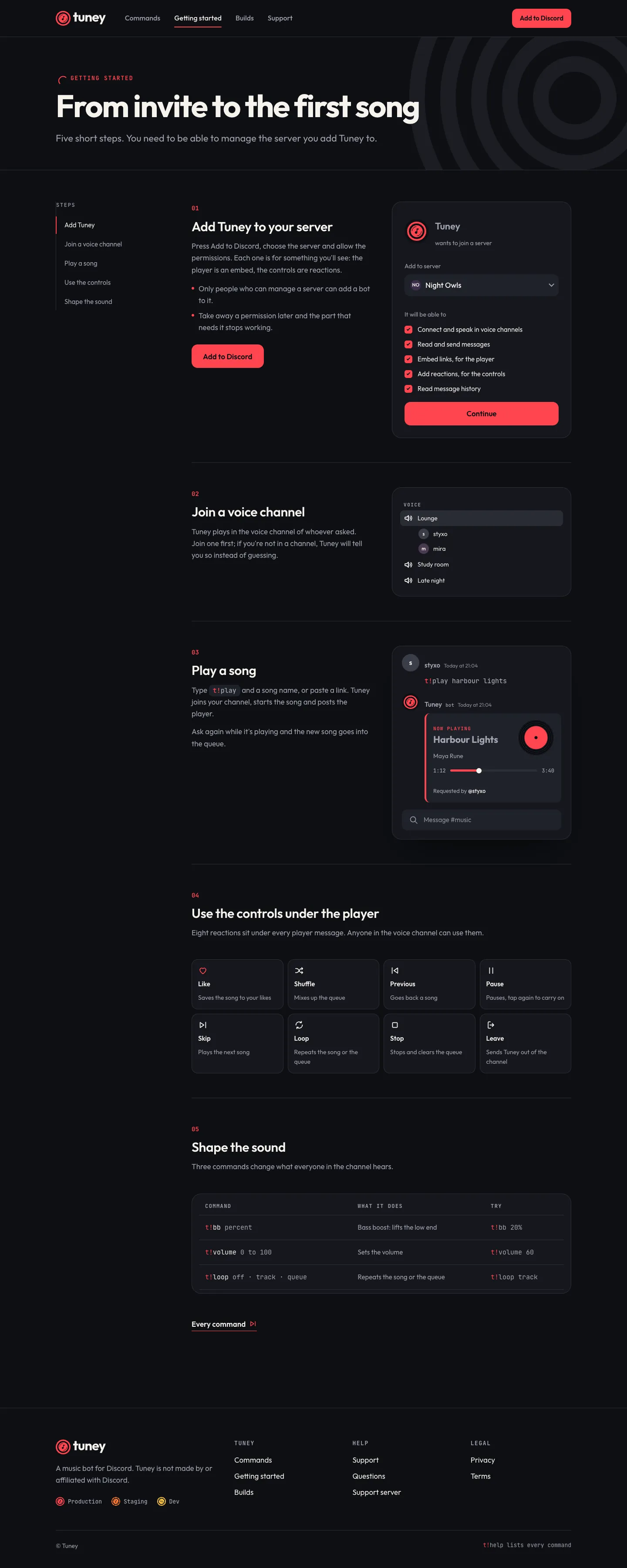
Getting started: from the invite to the first song, in five steps
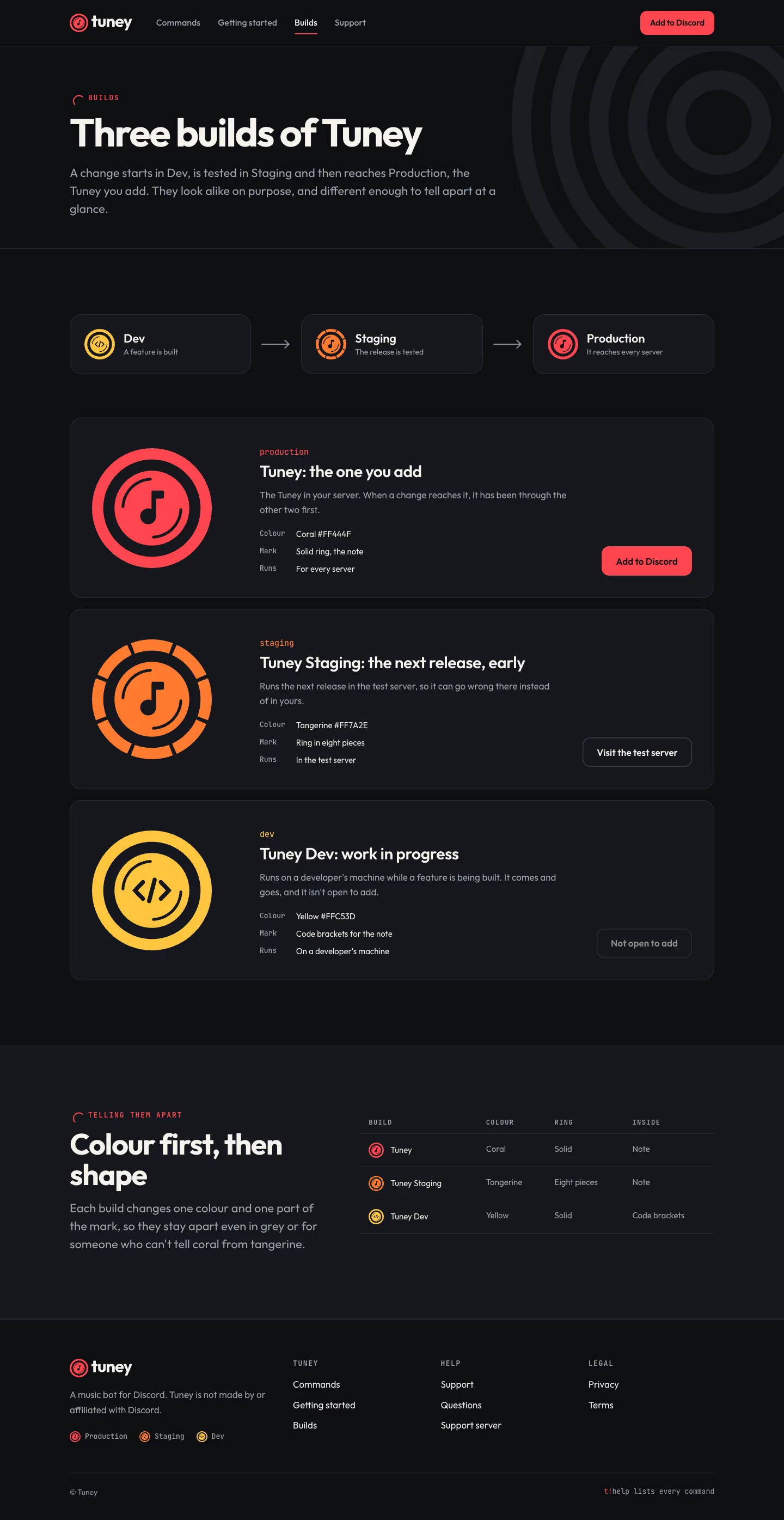
Builds: what production, staging and dev are, and how to tell them apart
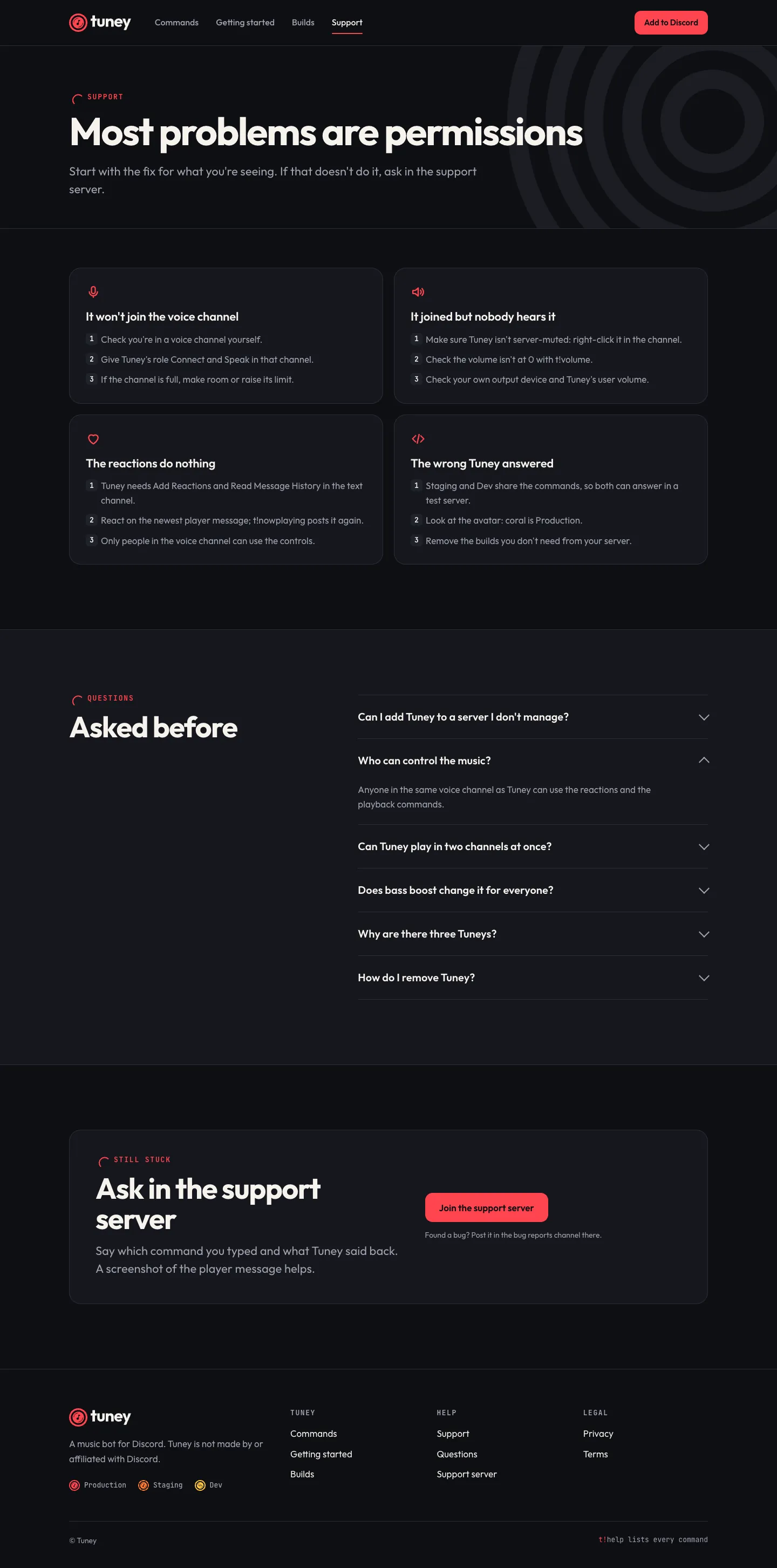
Support: fixes for the usual problems, then questions
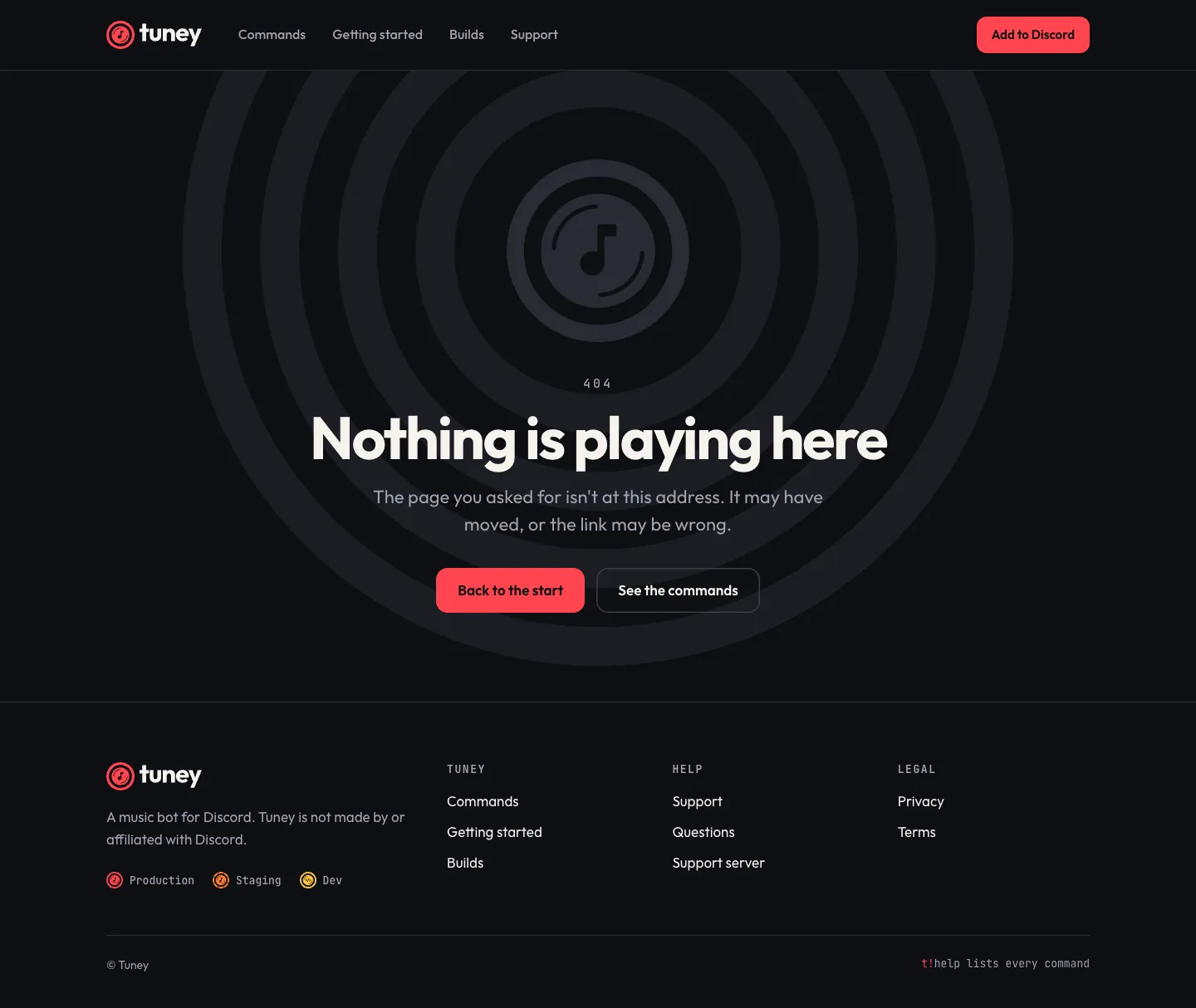
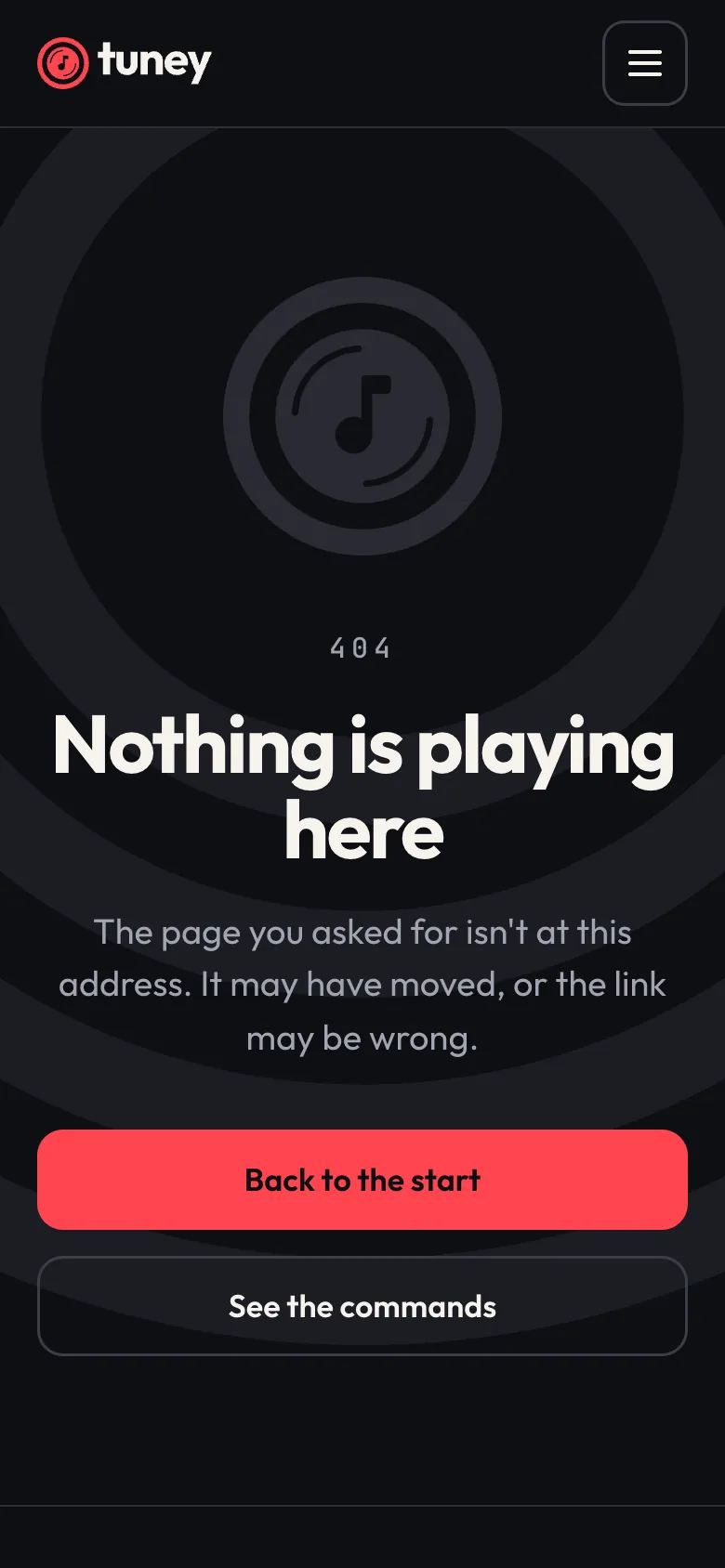
The 404: nothing is playing here, with the mark in grey.
Credits
- Client
- Tuney
- Services
- Identity design, Web design, Social media design
- What we made
- The mark redrawn on a grid, with a small version for 24 px and under
- A mark for each build: production, staging and dev
- Wordmark, horizontal and stacked lockups, one-colour and reversed versions
- Colour, type and sixteen command icons
- Six illustrations carrying on the original two
- App icon, avatars and a profile banner for each build
- Two post templates and a story
- A slipmat and a sticker sheet
- A six-page website at 1440 and 390
- Notes
- The icon, its build colours and the Bass boost and Reaction controls pictures were our earlier work for Tuney; everything else here is new design and not live. The commands on the site follow the bot as those pictures show it (the t! prefix, bass boost, the reactions under the player); they, and how the staging and dev builds run, are to be checked against the bot before anything ships.